
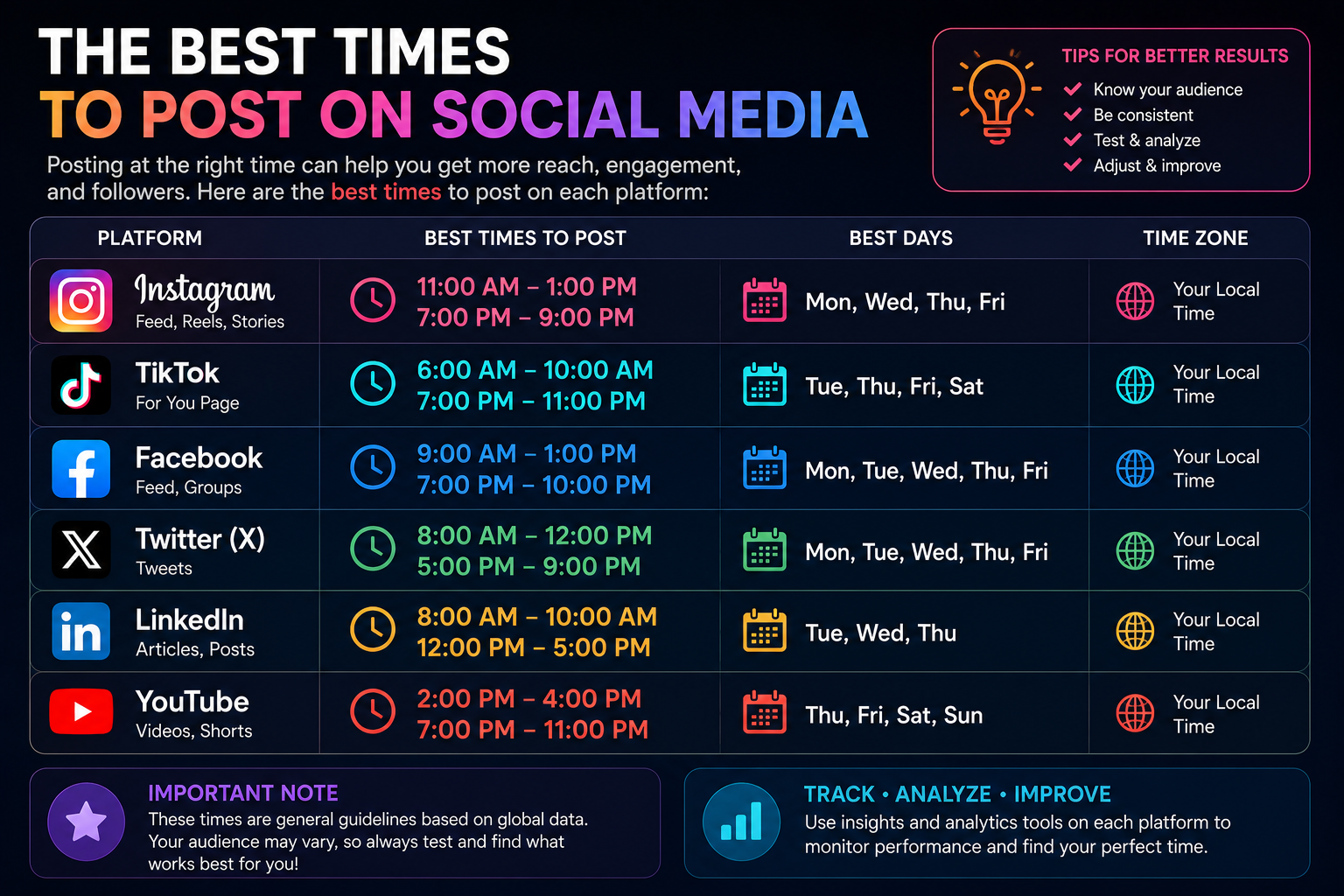
Posting great content at the wrong moment means fewer people see it in the crucial first hour — and on every platform, that first hour decides how far your post travels. Below are the best times to post on social media in 2026, platform by platform. But first, the rule that matters more than any clock — because timing only works once you understand why it works.
Why timing works: the first-hour effect
Every major algorithm tests new content on a small slice of your audience first. If those people engage quickly — likes, comments, shares, watch time — the platform pushes it to a bigger audience. Post when your followers are awake and active, and you stack the deck for that test. Post at 3 a.m. and your content competes for attention while everyone sleeps. This is the same compounding mechanic we break down in how to go viral on TikTok.
Best times by platform (2026)
- Instagram — Weekdays 11 a.m.–1 p.m. and 7–9 p.m. local time. Reels do best in the evening when people scroll to unwind. More tactics in our Instagram followers guide.
- TikTok — Early afternoon (1–3 p.m.) and late evening (7–11 p.m.). TikTok is global and nocturnal — late posts often outperform.
- YouTube — Publish 2–4 hours before your audience's peak (early afternoon for an evening peak) so the video gathers early views before prime time. See our YouTube growth guide.
- Facebook — Weekday mornings 8–10 a.m. and lunchtime. Older, routine-driven audience.
- X (Twitter) — Weekday mornings and around 5–6 p.m. commute time. Speed and frequency matter most here.
- Telegram — Evenings and weekends, when communities are most active. More in how to get more Telegram members.
- LinkedIn — Tuesday–Thursday, 8–10 a.m. Strictly a business-hours platform.
Best times by day of the week
Day matters as much as hour. As a general rule for 2026: Tuesday through Thursday are the strongest days for most platforms — people are online and engaged but not yet in weekend mode. Mondays are slow (inboxes and feeds are crowded), Fridays taper off by afternoon, and weekends favor entertainment platforms like TikTok, YouTube and Telegram while business platforms like LinkedIn go quiet. Match the day to the mindset: educational and B2B content midweek, fun and casual content on weekends.
How to find YOUR best time
These windows are starting points — your real best time depends on where your audience lives and when they're online. To find it:
- Check your analytics. Instagram, TikTok and YouTube all show when your followers are most active. Trust your data over generic charts.
- Test and compare. Post similar content at different times for two weeks and watch which slots earn the fastest engagement.
- Mind time zones. If your audience is global or in another country, post for their clock, not yours.
- Stay consistent. A predictable schedule trains both your audience and the algorithm — consistency compounds, as shown in the effect of social media on growth.
Posting for a global audience
If you target multiple countries, there's no single perfect time — there are several. Find your two or three biggest audience regions in your analytics, then schedule posts to land in the prime evening window of whichever region matters most for that piece of content. A practical trick: post your most important content during the overlap when several major regions are awake (for a US + Europe audience, that's early-to-mid US afternoon). When in doubt, prioritize the region where your buyers or most engaged followers are, not just the largest raw audience.
How to build a simple posting schedule
- Pick 2–3 fixed slots per platform based on the windows above, then stick to them so your audience learns when to expect you.
- Batch and schedule a week of content in advance so timing never depends on you being free at 7 p.m.
- Review monthly — your best times shift as your audience grows; check analytics and adjust.
- Protect the first hour — be available to reply to early comments right after posting; that engagement decides reach.
Give your timing a head start
Posting at the right time gets your content in front of people — but a slow first hour can still stall a good post. Many creators give a new post an early push so it clears the algorithm's first test batch, then let organic momentum take over — for example Instagram likes, TikTok views or YouTube views in the first hour. Combined with smart timing, it's one of the fastest ways to grow.
Frequently asked questions
What is the best time to post on social media in 2026?
For most platforms, weekdays Tuesday–Thursday, late morning (11 a.m.–1 p.m.) and evening (7–9 p.m.) local time, perform best. But your real best time is whenever your specific audience is most active — check your analytics.
Does the time you post really matter?
Yes. Algorithms test new posts on a small group first, and engagement in the first hour decides how far the post spreads. Posting when your audience is active stacks the odds in your favor.
What is the best time to post Reels and TikToks?
Early afternoon (1–3 p.m.) and late evening (7–11 p.m.) tend to work best, since short-video platforms are global and most active when people relax. Test both windows with your own audience.
How do I find my own best time to post?
Use your platform's built-in analytics to see when your followers are online, test posting at different times for two weeks, mind your audience's time zones, and post consistently in the slots that earn the fastest engagement.
Want help with the whole strategy? Analyze your profile for free to see what to prioritize, or create a free Widerz account and boost your next post the moment it goes live.